Category: Art of living

  • Reclaiming Your Power: How Anger Can Lead You Back to Your Life Force

    Have you been feeling anger more often lately—maybe even in small, everyday moments? It can feel surprising, even unsettling. But when anger rises, it often carries more wisdom than we realize.

    Rather than something to fear or suppress, anger can actually be a doorway back to your natural energy, vitality, and power.

    Anger Is Often About More Than the Present Moment

    When anger shows up strongly, it’s rarely just about what is happening right now. Beneath the surface reaction—whether it’s tightness in the chest, a swirling storm in the belly, or the impulse to shout—there is often a deeper layer: a memory of a time when you needed your anger, your power, but had to suppress it.

    Over time, these moments can create blockages in your natural flow of life force energy. Anger today might be life’s way of inviting you to reconnect to those blocked places—and to reclaim the energy that was tucked away.

    The Opportunity Within Anger

    If you’re willing to pause and meet anger with presence, rather than judgment or suppression, something begins to shift.

    You might notice that the anger itself isn’t the enemy. It’s a signal—a call to feel deeper, to offer yourself the support that was missing before. It’s an opportunity to sit with younger parts of yourself, letting them know that now, it’s safe to feel and express power.

    The goal is not to stay entangled in anger, but to move through it, finding the steady strength underneath. Over time, you learn to access your inner vitality directly, without needing anger to unlock it first.

    Check here for new dates for the 11-week Presence Process Guided Online Journey.

    A Simple Practice: Meeting Anger with Presence

    Next time you feel anger rise, try this:

    1. Pause. Take a deep breath before reacting. Notice where you feel the anger in your body. Is it in your chest, your belly, your throat?

    2. Feel without labels. Set aside the story about who or what caused the anger. Instead, stay with the raw physical sensation. Feel it fully, as if you were offering a hand to a younger version of yourself who didn’t get to express this before.

    3. Stay present. Remind yourself: It’s safe to feel. I don’t need to act on this feeling right now. I am here for myself.

    4. Allow movement if needed. If your body wants to move—maybe shaking, stomping, or making a sound—find a safe, private space to let the energy move through you.

    5. Breathe. After a few moments, notice how the sensation shifts. Often, underneath anger, there is grief. And if you can breathe into that, you may find relief, strength, and a new sense of aliveness.


    When anger is met with presence, it becomes more than just a reaction—it becomes a path to reclaiming what is already yours: your life force, your vitality, and your authentic power. 

    Check here for new dates for the 11-week Presence Process Guided Online Journey.


    Image by Henryk Niestrój

  • Breaking Free from Fear through Presence

    Have you ever noticed how certain patterns seem to repeat in your life, no matter how much you want things to change? You recognize the signs, you feel the pain or fear, yet somehow the spiral continues.

    When someone recently asked me for a fresh perspective to help break such a cycle, two practices came to mind — both grounded in the power of presence.

    1. Shifting from Story to Sensation

    This is a key element of The Presence Process (new dates for the online group here).
    This process teaches us to move our attention away from what we see — the circumstances, the storylines, the reasons — and instead place it on what we feel — within, here and now, without needing to explain or label it.

    Instead of seeing events through the mind’s interpretation, we begin to experience them as energy in motion (e-motion). Patterns, pain, and fear are no longer just problems to solve, but felt sensations to meet: warmth, cold, tension, release, movement.

    We are invited to feel these energies unconditionally. Without the mental story. Without even labeling them as “pain” or “fear.” Just feeling — raw, real, alive.

    And if we do, we’ll start recognizing patterns through sensation. We deepen into unconditional presence: simply being with what arises. And as we get better at feeling, we’ll move ever closer to the original imprints that have shaped our lives. When we finally feel them unconditionally, the old imprints lose their power. Life circumstances shift — or our experience of them changes so profoundly that they no longer hold us captive.

    The path to breaking any spiral is simple, but not always easy: Feel it all, without condition.

    2. Meeting Fear with Full Presence

    The second practice is something I turn to personally, especially when deep fear about the future shows up.

    Whenever fear arises, I don’t push it away.
    Instead, I welcome the possibility of what I’m afraid of happening.
    I sit upright (or stand tall), imagine it vividly, and breathe deeply into the fear. I stay present, breathing fully, even when every part of me wants to recoil. I breathe until I feel free and strong — even while holding the image of the thing I fear most.

    If the situation is particularly triggering, I take a mental snapshot and place it in a frame on the wall. In my mind’s eye, I look at the image, then at the wall around it (move your eyes all around!). Then at the image again, then again at the wall. Keep on breathing. Take a step closer and repeat. Find your spot as close to or far away from the image as you need to keep on breathing and standing tall. This is how I practice staying present with any fearful image in my mind.

    I do this even with situations that feel unbearable to imagine.
    And each time, the fear loses its grip.
    It dissolves.
    It transforms into love.
    And I find myself free.

    Trust the Power of Presence

    It’s natural to want to break free from fearful spirals. And the key is not to fight harder, or think smarter — it’s to stay with everything that arises, including the things that scare you the most. You don’t have to enjoy it. You don’t have to fix it.
    You simply have to stay.

    And if you’re worried that imagining worst-case scenarios could somehow create them — please know: Creation flows through feeling, not thinking. When you feel free and steady even amidst imagined fear, you open yourself to an entirely new reality — one shaped by presence, love, and deep resilience.

    And often, life responds in ways that feel nothing short of miraculous.


    Image by Małgorzata Tomczak

  • Beyond the emotion: deepening into the felt sense

    If you’re someone who feels deeply—who walks through the world attuned to the subtle shifts of emotion, to beauty, melancholy, longing, and awe—then you likely already know that emotions are powerful guides. They tell us when something matters.

    But what happens when we begin a presence practice like The Presence Process or any form of inner work that invites us not just to observe or name our emotions, but to feel them—in the body and without the story?

    For many emotionally attuned people (and if you know the Enneagram, I am writing this specifically with Enneagram type 4s in mind), there’s a subtle but significant shift that can make all the difference: learning to move through the emotion into the felt sense, rather than staying caught in the emotional narrative.

    Emotion as a Doorway, Not a Destination

    It’s easy—and sometimes comforting—to linger in the emotion itself. To feel deeply is a superpower, but often, our identity gets wrapped up in that capacity. To wield this superpower and not be consumed by it, we need to let go of the story of the emotion, its label—and to sink into the raw, wordless sensation of it.

    I liken this sensation to a vast inner landscape with areas that you may associate with the belly, heart, shoulders, jaw, etc, , but in the gut, the chest, the shoulders, the jaw, etc, but . It might be heat, tightness, a swirl, a shimmer, a numb patch. It may not even have a name. That’s okay. That’s actually the point.

    Ways to Deepen into the Felt Sense

    Here are a few invitations that may help if you find yourself looping in the emotion without quite landing in the body:

    Reframe the Journey
    You’re not leaving your depth behind. You’re going deeper. Feeling the body is not a betrayal of your emotional wisdom—it’s a deepening into truth beyond the drama. It’s the poetry that hasn’t been written yet.

    Shift From Story to Sensation
    When strong emotion arises, gently ask:

    • Where do I feel this in my body?

    • What’s the texture—tight, heavy, spacious, hot, numb?

    • Can I stay with the physical sensation, without needing to name the emotion or explain it?

    This takes us out of mental processing and into somatic presence.

    Let Go of the “Why”
    You might find that the mind wants to loop around why you feel this way—who said what, what memory it stirs, what it means. That’s natural. But when you’re practicing presence, you’re invited to drop the “why” and just feel what is.

    Ground in Neutral Awareness
    Presence isn’t a mood. It’s not about feeling peaceful or blissful or even emotionally clear. It’s about being with what’s here, just as it is. Presence is open, grounded awareness—neutral, stable, kind. Let that be your anchor.

    Use the Breath
    Breath can help guide us below the surface of emotion. Try:

    • Breathing into the lower belly or soles of your feet

    • Letting your exhale be longer than your inhale

    • Feeling the breath as a gentle wave that moves under the emotion, not through it

    Notice When You’re “Hovering”
    If you feel like you’re circling a familiar emotional space—again and again—pause. Ask yourself: Am I actually feeling this fully, or am I orbiting it? Then gently drop the story, and come back to breath and body.

    Emotions are valuable. But they are not the final stop. When we learn to stay with them—beyond identification, beyond narrative—we open into a deeper kind of healing. One that isn’t about fixing or explaining, but simply about being here, now, in this, unconditionally.

    And that, quietly and without drama, can change everything.

    (If you are ready to commit to this practice and learn to use your emotions as a superpower, and not be overpowered by them, join our next Presence Process group.)

  • The Work of Byron Katie: a beautiful example for changemakers

    The Work of Byron Katie: a beautiful example for changemakers

    In this enlightening and entertaining video, you’ll see The Work by Byron Katie applied by a woman who holds strong grudges towards the meat industry.

    She quickly realises how her negative thoughts are preventing her from seeing clearly and compassionately. She comes to see how she has been a slave to her own thinking, and wakes up from that illusion.

    She comes out so much wiser and lighter, the truly powerful woman that she is.

    The video is a beautiful example both of The Work (a simple process for inner awakening) and of conscious activism.

  • Parenting with Presence (book tip)

    A little while ago, a friend had been cradling our then 13 month old daughter as she was struggling to sleep.

    “She required nothing but complete presence,” he said afterwards, “or she would cry.”

    Indeed, when he picked up a book, she would wake up and cry. For her to sleep, he had needed to sit with her in perfect stillness.

    Now how’s that for a Zen practice?

    But good parenting requires more. Perfect stillness at some times, creativity and strong action at others. And especially in those moments when it gets really hard, that’s where the magic happens: we either plant the seeds for further drama, or cut the chord connecting generations of suffering and set ourselves and our children free.

    In Parenting with Presence (Nederlands: Opvoeden in het Nu, Deutsch: Kindererziehung im Jetzt), Susan Stiffelman helps parents find peace, joy and transformation through the everyday encounters with their children. She gives many examples of how we can raise our children and ourselves to be conscious, compassionate and centered human beings.

    I loved this book. It made me even more aware of how connection is so important in any relationship – with myself, my child and my partner. It gave me a sense of lightness about parenting teenagers, which is not the phase that I am in yet but it will some day. And it is just super practical, going beyond wishful thinking pseudo-spiritual blabla into the knitty-gritty of real life parenting and its challenges.

    Recommended by Eckhart Tolle.

  • Water pouring into water

    Pondering the unspeakable

    And how to speak of it

    A thought comes:

    Life gave me life

    Water pouring into water

    Snap

    Visionary imagery

    Curtain radiant with being

    Then stillness –

    Timeless unity

    One an instant

    Eternal minute

    Mind no more

    Everything I

    Blissful smile

    Then back online:

    Hey, I should really write a blog about this.

  • Liberated from prison

    Liberated from prison

    One of my teachers, the beloved Ananta Kranti, was liberated while doing time in a Japanese prison. The intense regime and extremely limited freedom led her to finding peace within herself, a limitless place underneath the experience of severe deprivation.

    Another friend woke up in the storm of heartache after losing the (then) love of her life.

    An acquintance has found her freedom through the death of her nine year old son.

    Michael Brown suffered from excruciating headaches, healed himself through a combination of breathwork and mental/spiritual discipline and delivered The Presence Process to the world.

    Eckhart Tolle, Byron Katie and Marianne Williamson were depressed on the verge of suicide, woke up from their nightmare and became three of the world’s most recognized teachers in self realisation.

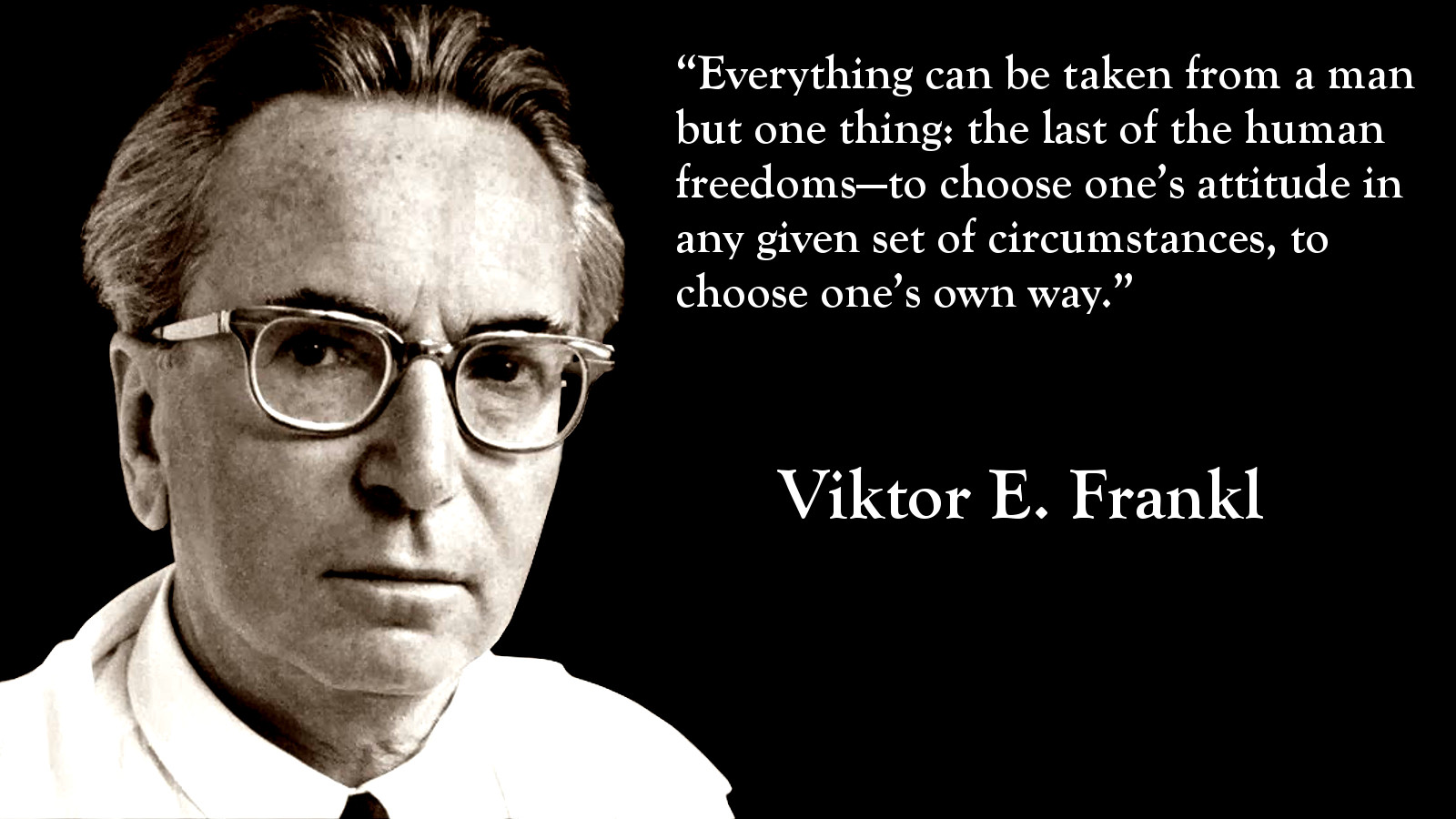
    Viktor Frankl wrote the iconic Man’s Search for Meaning thanks to his three years in Nazi concentration camps.

    We are so much greater than anything that can happen to us. Our prisons are mind made. Even – no, not even: especially in the midst of the deepest suffering lies our opportunity to break free from it forever.

    And writing those words, this now brings home Byron Katie’s statement, already understood but now realised in an even deeper way:

    “Until you can look forward to all aspects of life without fear, your Work is not done.”
    – Byron Katie

  • Suffering and the meaning of life

    Suffering and the meaning of life

    A couple of days ago I read Sacha Post’s post about asking yourself your Most Important Questions. In it, he recommends intentionally asking the Most Important Question (MIQ) that is alive in you right now, then get into a relaxed state for the remainder of the day and revisit the question first thing in the morning.

    I liked the idea and found my own MIQ rather quickly:

    Why is there suffering?

    In my earlier inquiries into this question before, I hadn’t been able to find a satisfying answer. Yet I knew deeply that there was more to this subject. And now that I have found my answer, it seems to obvious I can hardly believe it wasn’t this clear before.

    The next day after intentionally setting my MIQ, as soon as I revisited the question, a book title came to my mind. It’s a famous book that I had never before taken the opportunity to read. The title is Man’s Search for Meaning by Viktor Frankl and it is the personal and professional account of a Jewish psychiatrist who lived in Nazi concentration camps for three years and survived.

    As soon as I started reading, page after page, the book took my question to a higher level and answered it with countless examples.

    Reading it, I have come to rephrase the original MIQ to:

    What is the meaning of suffering?

    In his book, Viktor Frankl states that the meaning of our life can be found through 1) work, 2) love and 3) suffering. (Not that suffering is desirable: as long as it can be avoided, we should find meaning in changing our situation for the better.) But when suffering is unavoidable, even when everything has been taken away from us, the last of our human freedoms that can not be taken away is this: the freedom to choose one’s attitude in any set of circumstances, to choose one’s own way.

    This turns around the perception of suffering from something inherently bad into something possibly beneficial. I myself have lived through trauma, transformed it and lived with the fruits of this inner work for years, but I always kept thinking: what would happen in the worst of the worst of circumstances?

    Never have I found such a clear explanation of the value of suffering as in this book, coming from the mouth of a survivor of the Holocaust – the epitome of suffrage. Paraphrased, what he argues is this:

    Suffering helps find the meaning of life

    In Frankl’s view, the will for meaning is our deepest drive (not the will for sex or fear or power, as some of his predecessors have proposed). Responding to suffering is an opportunity to give meaning to our life, and true meaning can only be found in self-transcendence.

    And there I found the answer to my MIQ, in my own understanding:

    Suffering is a means to awakening

    If we let it.

    And that is essential: we have to let it. Frankl’s invitation is to take responsability in our approach to life, where we have the opportunity to show human greatness, and to never stop making that brave choice.

    Instead of asking, “what is the meaning of my life?” we should recognize that actually life is asking this question of us. We can give our own answer by responding to our life’s circumstances in the best way we possibly can:

    “In accepting this challenge to suffer bravely, life has a meaning up to the last moment, and it retains this meaning up to the very end.”
    – From Man’s Search for Meaning by Viktor Frankl

    The psychiatrist acknowledges that not everybody in the Nazi camps has been able to transcend this amount of suffering, in fact – most weren’t. Yet the examples of some of them who did, even if only a few, are proof of our natural and true human potential.

    I would like to end with the final sentences of Man’s Search for Meaning, words that brought chills all over my body and tears in my eyes:

    “Our generation is realistic, for we have come to know man as he really is. After all, man is that being who invented the gas chambers of Auschwitz; however, he is also that being who entered those gas chambers upright, with the Lord’s Prayer or the Shema Yisrael on his lips.”

  • Live your questions (Rilke quote)

    Live your questions (Rilke quote)

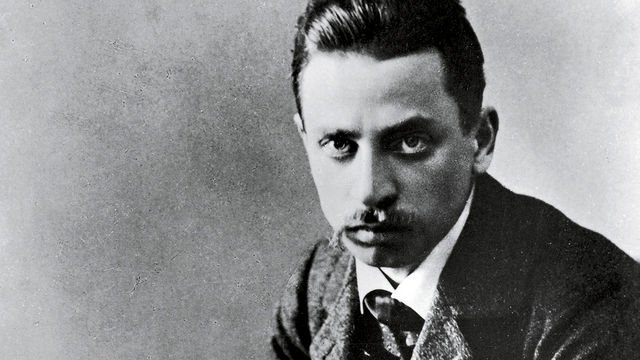
    I love this poem, which is not really a poem but a piece taken from a letter from Rilke to a young friend. It opens the space for the creative power of life to answer what is alive in our hearts, instead of putting pressure on the mind which is often a bad advisor anyway:

    “(…) Be patient toward all that is unsolved in your heart and try to love the questions themselves, like locked rooms and like books that are now written in a very foreign tongue. Do not now seek the answers, which cannot be given you because you would not be able to live them. And the point is, to live everything. Live the questions now. Perhaps you will then gradually, without noticing it, live along some distant day into the answer.”

    – Rainer Maria Rilke

    In the original language, German:

    (…)

    Man muss Geduld haben

    Mit dem Ungelösten im Herzen,
    und versuchen, die Fragen selber lieb zu haben,
    wie verschlossene Stuben,
    und wie Bücher, die in einer sehr fremden Sprache
    geschrieben sind.

    Es handelt sich darum, alles zu leben.
    Wenn man die Fragen lebt, lebt man vielleicht allmählich,
    ohne es zu merken,
    eines fremden Tages
    in die Antworten hinein.

  • Stop believing your mind (read The Untethered Soul)

    Stop believing your mind (read The Untethered Soul)

    “There is nothing more important to true growth than realizing that you are not the voice of the mind – you are the one who hears it.”
    Michael A. Singer, The Untethered Soul: The Journey Beyond Yourself

    Here’s a fun exercise: write down your thoughts for a day, or even a couple of hours. Then read out loud what you’ve written down.

    It will be a dreamlike, rather incomprehensive monologue or inner conversation, a collection of words and sentences pretty random, often contradictive and colored by emotion.

    If this were a real life professional you were consulting for guidance in your life, would you be happy with their service? If this was your friend talking, would you think they are sane?

    In his book The Untethered Soul, Michael Singer helps readers let go of the sense that they are their minds, or even that they should believe their thoughts all the time. Instead, he helps them find their sense of I somewhere deeper, in a place untainted by the turbulence of life.

    Reading this book has helped me and many friends live from love, not fear, even when things get busy, messy or tough. I always recommend it to people who suffer from an overactive mind or who notice they live in their heads much of the time.

    “Do not let anything that happens in life be important enough that you’re willing to close your heart over it.”
    Michael A. Singer, The Untethered Soul: The Journey Beyond Yourself