A couple of days ago I read Sacha Post’s post about asking yourself your Most Important Questions. In it, he recommends intentionally asking the Most Important Question (MIQ) that is alive in you right now, then get into a relaxed state for the remainder of the day and revisit the question first thing in the morning.
I liked the idea and found my own MIQ rather quickly:
Why is there suffering?
In my earlier inquiries into this question before, I hadn’t been able to find a satisfying answer. Yet I knew deeply that there was more to this subject. And now that I have found my answer, it seems to obvious I can hardly believe it wasn’t this clear before.
The next day after intentionally setting my MIQ, as soon as I revisited the question, a book title came to my mind. It’s a famous book that I had never before taken the opportunity to read. The title is Man’s Search for Meaning by Viktor Frankl and it is the personal and professional account of a Jewish psychiatrist who lived in Nazi concentration camps for three years and survived.
As soon as I started reading, page after page, the book took my question to a higher level and answered it with countless examples.
Reading it, I have come to rephrase the original MIQ to:
What is the meaning of suffering?
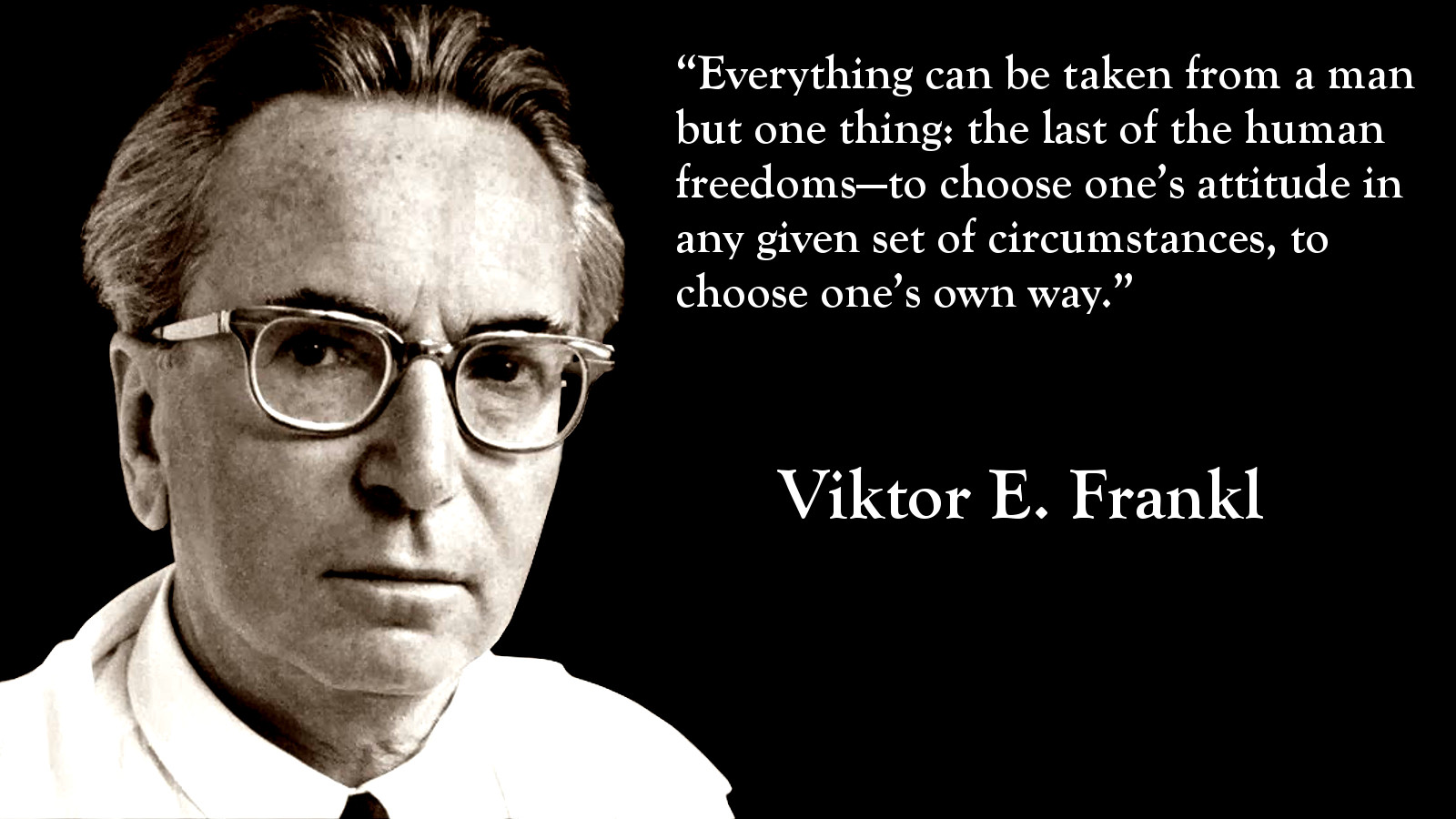
In his book, Viktor Frankl states that the meaning of our life can be found through 1) work, 2) love and 3) suffering. (Not that suffering is desirable: as long as it can be avoided, we should find meaning in changing our situation for the better.) But when suffering is unavoidable, even when everything has been taken away from us, the last of our human freedoms that can not be taken away is this: the freedom to choose one’s attitude in any set of circumstances, to choose one’s own way.
This turns around the perception of suffering from something inherently bad into something possibly beneficial. I myself have lived through trauma, transformed it and lived with the fruits of this inner work for years, but I always kept thinking: what would happen in the worst of the worst of circumstances?
Never have I found such a clear explanation of the value of suffering as in this book, coming from the mouth of a survivor of the Holocaust – the epitome of suffrage. Paraphrased, what he argues is this:
Suffering helps find the meaning of life
In Frankl’s view, the will for meaning is our deepest drive (not the will for sex or fear or power, as some of his predecessors have proposed). Responding to suffering is an opportunity to give meaning to our life, and true meaning can only be found in self-transcendence.
And there I found the answer to my MIQ, in my own understanding:
Suffering is a means to awakening
If we let it.
And that is essential: we have to let it. Frankl’s invitation is to take responsability in our approach to life, where we have the opportunity to show human greatness, and to never stop making that brave choice.
Instead of asking, “what is the meaning of my life?” we should recognize that actually life is asking this question of us. We can give our own answer by responding to our life’s circumstances in the best way we possibly can:
“In accepting this challenge to suffer bravely, life has a meaning up to the last moment, and it retains this meaning up to the very end.”
– From Man’s Search for Meaning by Viktor Frankl
The psychiatrist acknowledges that not everybody in the Nazi camps has been able to transcend this amount of suffering, in fact – most weren’t. Yet the examples of some of them who did, even if only a few, are proof of our natural and true human potential.
I would like to end with the final sentences of Man’s Search for Meaning, words that brought chills all over my body and tears in my eyes:
“Our generation is realistic, for we have come to know man as he really is. After all, man is that being who invented the gas chambers of Auschwitz; however, he is also that being who entered those gas chambers upright, with the Lord’s Prayer or the Shema Yisrael on his lips.”