Category: Blog NL

  • Breastfeeding in mindfulness

    Breastfeeding is a beautiful moment between me and my baby. A precious moment to rest, connect, and exchange. During breastfeeding, there is a direct energy connection between the baby and mother. Skins touch, hormones soar, reflexes act, milk flows. It is a deeply intuitive process that taps into the most ancient parts of both our brains.

    It matters how we spend our time
    As nursing mothers (and actually this goes for all baby feeding parents) we spend up to several hours each day sitting with our little one. In stead of browsing social media, checking messages or watching Netflix, why not spend this time with them consciously connecting, breathing or meditating? It’s a great opportunity! You are here sitting still anyway ;).

    Your baby, whilst drinking from your breast, is very much in tune with your body (and you with hers). She unconsciously and immediately picks up on every signal: your heart rate, sweat response, muscle tension, and breathing rhythm – to name a few.

    Just imagine the difference for your child when she looks up to look at you face and sees you either distressed by the news/consumed by a screen as opposed to lovingly/playfully looking at her or your eyes closed gently in silent meditation. She probably won’t remember consciously but the vibration of these early experiences will be stored in subtle layers of the body-mind.

    A gift to mother and child
    Nursing my baby has become a daily recurring practice of playfulness and mindfulness in the months since her birth. The time spent with her at my chest is so incredibly precious.

    The sensation of her tiny chubby fingers stroking, squeezing and tapping my chest (causing oxytocin to soar and milk to flow) – oh! delicious miracle of nature.

    Her giggles as she playfully turns my face away and back again with her hand.

    Her deep blue eyes looking up at me, sometimes smiling, sometimes focused, sometimes drunk with milk.

    Watching her fall asleep, breath becoming deeper and deeper, as she drinks or suckles.

    Sacred and natural
    The more attention I bring to the process, the deeper and more subtle are the layers I start to notice and I realise the intricacies of our humble role in the circle of life. Nothing is more normal and yet nothing is more sacred than this moment between me and my little one. Consciously breastfeeding like this is a gift to us both.

    Read this wonderful poem for a much more poetic account of nursing.

    And of course, in a different yet also very much the same way, much of the above applies to parents and caretakers bottle feeding babies as well.

    Mindful breastfeeding/nursing exercise

    Try this:

    While nursing your baby, become silent. Breathe deeply and relax. Soften your belly and feel it rise and fall as you breathe in and out. Sense the breath of your baby and the movement of his or her belly and chest as s/he breathes.

    Gently notice what comes to your attention: sounds, feelings, thoughts. Simply gently notice and let it stay or pass, like a white cloud in the clear blue sky. If your attention has drifted away for a moment, gently bring it back to the awareness of the breath and the sensation of your baby’s body and yours touching.

    Your baby may soon relax into your caring presence. By your breath alone, she knows she is safe. Also, if she is very young, her natural breath will still be arythmic and through sensing your rhythmic breath, she learns to regulate hers.

    If you are not used to this kind of practice, know that you are not just sitting still. You are ‘holding space’ for your child, that means: providing a safe container for her to move through all the phases and experiences of being a baby. The quality of your presence is worth so much for her.

    If you choose, you can now proceed to practice the 4-8 relaxation breath to invoke the relaxation response which is very beneficial for both you and your baby, or possibly even the conscious connected breath if you are free of emotional charge. More about that later :).

     

  • Liberated from prison

    Liberated from prison

    One of my teachers, the beloved Ananta Kranti, was liberated while doing time in a Japanese prison. The intense regime and extremely limited freedom led her to finding peace within herself, a limitless place underneath the experience of severe deprivation.

    Another friend woke up in the storm of heartache after losing the (then) love of her life.

    An acquintance has found her freedom through the death of her nine year old son.

    Michael Brown suffered from excruciating headaches, healed himself through a combination of breathwork and mental/spiritual discipline and delivered The Presence Process to the world.

    Eckhart Tolle, Byron Katie and Marianne Williamson were depressed on the verge of suicide, woke up from their nightmare and became three of the world’s most recognized teachers in self realisation.

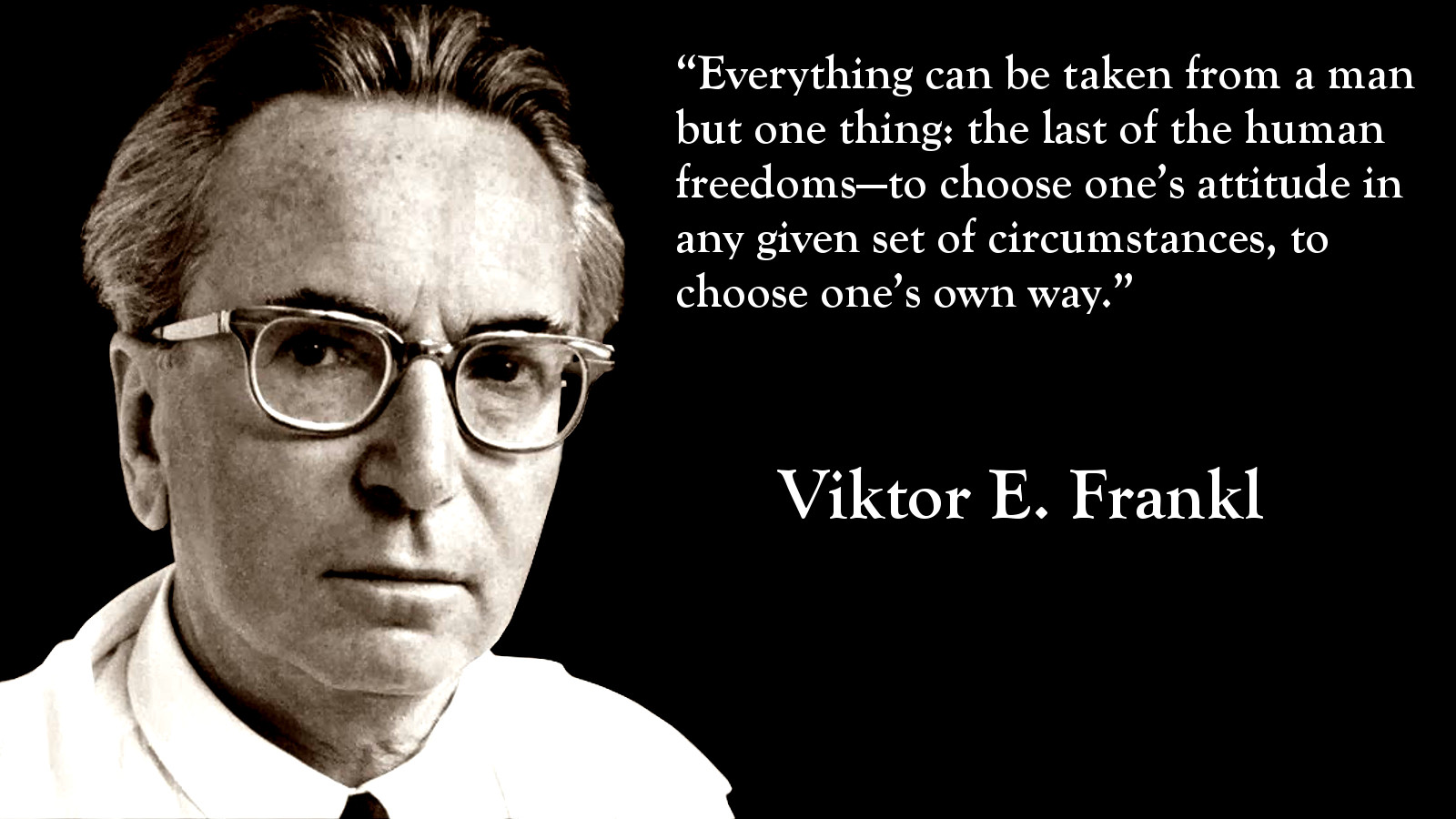
    Viktor Frankl wrote the iconic Man’s Search for Meaning thanks to his three years in Nazi concentration camps.

    We are so much greater than anything that can happen to us. Our prisons are mind made. Even – no, not even: especially in the midst of the deepest suffering lies our opportunity to break free from it forever.

    And writing those words, this now brings home Byron Katie’s statement, already understood but now realised in an even deeper way:

    “Until you can look forward to all aspects of life without fear, your Work is not done.”
    – Byron Katie

  • Suffering and the meaning of life

    Suffering and the meaning of life

    A couple of days ago I read Sacha Post’s post about asking yourself your Most Important Questions. In it, he recommends intentionally asking the Most Important Question (MIQ) that is alive in you right now, then get into a relaxed state for the remainder of the day and revisit the question first thing in the morning.

    I liked the idea and found my own MIQ rather quickly:

    Why is there suffering?

    In my earlier inquiries into this question before, I hadn’t been able to find a satisfying answer. Yet I knew deeply that there was more to this subject. And now that I have found my answer, it seems to obvious I can hardly believe it wasn’t this clear before.

    The next day after intentionally setting my MIQ, as soon as I revisited the question, a book title came to my mind. It’s a famous book that I had never before taken the opportunity to read. The title is Man’s Search for Meaning by Viktor Frankl and it is the personal and professional account of a Jewish psychiatrist who lived in Nazi concentration camps for three years and survived.

    As soon as I started reading, page after page, the book took my question to a higher level and answered it with countless examples.

    Reading it, I have come to rephrase the original MIQ to:

    What is the meaning of suffering?

    In his book, Viktor Frankl states that the meaning of our life can be found through 1) work, 2) love and 3) suffering. (Not that suffering is desirable: as long as it can be avoided, we should find meaning in changing our situation for the better.) But when suffering is unavoidable, even when everything has been taken away from us, the last of our human freedoms that can not be taken away is this: the freedom to choose one’s attitude in any set of circumstances, to choose one’s own way.

    This turns around the perception of suffering from something inherently bad into something possibly beneficial. I myself have lived through trauma, transformed it and lived with the fruits of this inner work for years, but I always kept thinking: what would happen in the worst of the worst of circumstances?

    Never have I found such a clear explanation of the value of suffering as in this book, coming from the mouth of a survivor of the Holocaust – the epitome of suffrage. Paraphrased, what he argues is this:

    Suffering helps find the meaning of life

    In Frankl’s view, the will for meaning is our deepest drive (not the will for sex or fear or power, as some of his predecessors have proposed). Responding to suffering is an opportunity to give meaning to our life, and true meaning can only be found in self-transcendence.

    And there I found the answer to my MIQ, in my own understanding:

    Suffering is a means to awakening

    If we let it.

    And that is essential: we have to let it. Frankl’s invitation is to take responsability in our approach to life, where we have the opportunity to show human greatness, and to never stop making that brave choice.

    Instead of asking, “what is the meaning of my life?” we should recognize that actually life is asking this question of us. We can give our own answer by responding to our life’s circumstances in the best way we possibly can:

    “In accepting this challenge to suffer bravely, life has a meaning up to the last moment, and it retains this meaning up to the very end.”
    – From Man’s Search for Meaning by Viktor Frankl

    The psychiatrist acknowledges that not everybody in the Nazi camps has been able to transcend this amount of suffering, in fact – most weren’t. Yet the examples of some of them who did, even if only a few, are proof of our natural and true human potential.

    I would like to end with the final sentences of Man’s Search for Meaning, words that brought chills all over my body and tears in my eyes:

    “Our generation is realistic, for we have come to know man as he really is. After all, man is that being who invented the gas chambers of Auschwitz; however, he is also that being who entered those gas chambers upright, with the Lord’s Prayer or the Shema Yisrael on his lips.”

  • Live your questions (Rilke quote)

    Live your questions (Rilke quote)

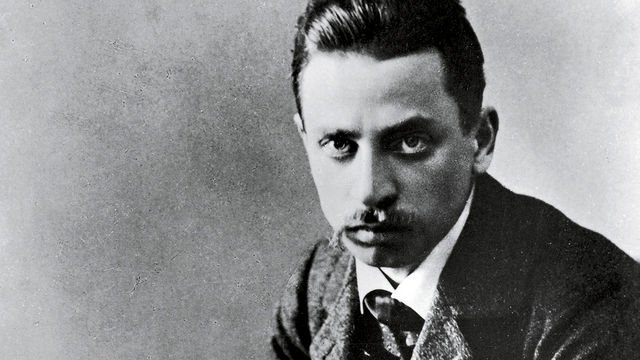
    I love this poem, which is not really a poem but a piece taken from a letter from Rilke to a young friend. It opens the space for the creative power of life to answer what is alive in our hearts, instead of putting pressure on the mind which is often a bad advisor anyway:

    “(…) Be patient toward all that is unsolved in your heart and try to love the questions themselves, like locked rooms and like books that are now written in a very foreign tongue. Do not now seek the answers, which cannot be given you because you would not be able to live them. And the point is, to live everything. Live the questions now. Perhaps you will then gradually, without noticing it, live along some distant day into the answer.”

    – Rainer Maria Rilke

    In the original language, German:

    (…)

    Man muss Geduld haben

    Mit dem Ungelösten im Herzen,
    und versuchen, die Fragen selber lieb zu haben,
    wie verschlossene Stuben,
    und wie Bücher, die in einer sehr fremden Sprache
    geschrieben sind.

    Es handelt sich darum, alles zu leben.
    Wenn man die Fragen lebt, lebt man vielleicht allmählich,
    ohne es zu merken,
    eines fremden Tages
    in die Antworten hinein.

  • My favorite animation of conception & baby growing in the womb

    My favorite animation of conception & baby growing in the womb

    When we had just found out I was pregnant, we found this video on Youtube. It is a beautiful animation not just of the fetus growing in the womb but also of the conception itself. Sperm swimming their way to the egg, competing to find their way in. Credits to the guys, without whom none of what follows were ever even possible.

  • Springrolls met rauwe groenten en dip

    Springrolls met rauwe groenten en dip

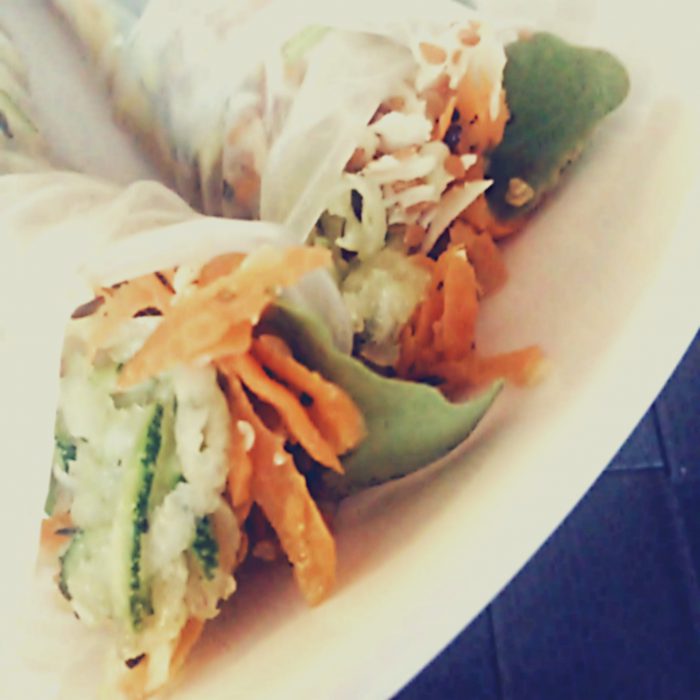
    Ik wou dat ik de tijd had genomen om een foto te maken die meer recht deed aan de knisperige, verse, nootachtige, zacht-en-toch-knapperige bite van deze schatjes.

    De waarheid is dat ik deze spring rolls niet echt zelf heb gemaakt; ik heb gewoon alle ingredienten op tafel gezet en liet mensen hun gang gaan met het vullen van de rijstpapiervellen. Dus om een leuke foto te maken, moest ik hun creaties van hun bord grissen en omhoog houden in de laatste zonnestralen van de dag… afijn. Je ziet het wel voor je. De foto hierboven is het beste dat ik voor elkaar kon krijgen ;).

    Nou zal ik het kort houden en meteen duiken in de geheimen van spring rolls rollen. Het idee is: alles kan. Ik vind het vooral leuk om twee of meer groenten te combineren met wat groene blaadjes, sesamzaad, sprouts en avocado en ze dan in soja- of chilisaus te dippen.

    raw-salads-stuffing-springrolls-pixlrVoor deze (bijna) rauwe, veganistische spring rolls, maakte ik drie kleurrijke groentecombinaties:

    • Courgette met tijm
    • Wortel met hennep en zwart mosterzaad,
    • Pastinaak met geroosterd sesamzaad

    We hadden ook drie verschillende dips: pittige chili, tahin (= sesampasta) met olijfolie en citroen, en sojasaus.

    En in plaats van avocado te gebruiken (wat echt absoluut wel heel erg fantastisch is om cremigheid mee aan de spring roolls toe te voegen), hebben we van deze genoten met een kant-en-klaar gekochte linzenspread die ik wat kruidiger en romiger gemaakt heb.

    Ten slotte zat er ook al genoeg avocado in de avocado lemon pie die we als dessert zouden eten…

    Courgette met tijm

    Rasp de courgette of snijd ‘m met een juliennesnijder. Voeg een beetje zout toe en laat 20 minuten uitlekken. Het zout trekt het overtollige vocht uit de courgette. Je kunt het vocht opvangen en gebruiken in een soep of saus.

    Voeg tijm aan de courgette toe naar smaak, liefst vers maar gedroogd kan ook.

    Wortel met hennep- en mosterdzaad

    Rasp de wortel of snijd met een juliennesnijder. Verhit intussen langzaam het mosterdzaad in een eetlepel kokos- of olijfolie. De zaadjes zijn klaar wanneer ze geuren en enthousiast poppen (wat dat ook moge betekenen – pas gewoon op dat ze niet verbranden en je ontwikkelt er vanzelf gevoel voor).

    Voeg hennep- en mosterdzaadjes samen met de olie toe aan de wortelrasp. Meng.

    Pastinaak met sesamzaad

    Rasp de pastinaak of snijd met een juliennesnijder. Voeg wat olijfolie toe en het sesamzaad. Die van mij waren al geroosterd. Vers roosteren is nog lekkerder.. Als je roostert is dit gerecht niet rauw meer, dus als je dat belangrijk vindt: niet doen ;). Geldt ook voor de mosterzaadjes hierboven, trouwens.

    Rijspapiervellen

    Wel elk vel in heet water voor 10-20 seconden. Neem uit, leg op bord, vul met gewenste vulling, zorg in ieder geval voor iets cremigs en iets knapperigs. Het geeft een leuk effect als je sesam- of mosterdzaadjes door het vel heen ziet schijnen. Rol op terwijl je ook in ieder geval één zijkant naar binnen vouwt, zodat de saus niet alle kanten op druipt.

    Eten met je handen en dubbel-dippen zijn toegestaan!