Your cart is currently empty!
Category: Expand
-
Breathwork for groups
I guide breath and bodywork sessions for (private) groups in this beautiful yurt (and other locations too).
I notice, and hear back from others, how a personal style is emerging. I feel grateful to be doing this work and to experience how it’s growing.
Sometimes I only understand why I do things the way I do when I receive feedback from participants:
“It’s as if you’re being breathed.”
“With you, it’s not such hard work.”
“It’s very gentle and deep at the same time.”And most of all, I see what it does for people:
“The wise woman in me woke up.”
“I moved beyond time and space.”
“I saw myself lying there and felt cared for.”
“I met a beloved who has passed.”
“I feel whole.”The breath brings you into the here and now. There, you can access great power. It’s so simple that many people overlook it their whole lives. For me, it’s a true medicine.
Of course, breathwork in a group setting is different from an individual session. Each has its own charm. In a group, you journey with the group’s energy and receive occasional guidance that is specific to you. In an individual session, there is space for in-depth one-on-one work with your personal challenges. But don’t underestimate the effect of a group session. Precisely the amplified setting, the shared experience, and the audible and tangible presence of others, each in their own process, can be profoundly deep and powerful.
Conscious breathing can be a life-changing experience.
Would you like to include a breathwork segment in your retreat or program? Feel free to get in touch.With deep gratitude to the hosts, facilitators, and participants.
-

The 4-8 relaxation breath
I’m sure you have heard of the fight or flight response. That’s when your adrenaline spikes, sending superhuman power to your arms and feet and razor sharp focus to your mind set to one thing: survive. Your breathing speed and heart rate go up. Blood flow is redirected from some of your organs to your extremities. You are alert and your body is tense, ready for action any moment.
The relaxation response
Now compare that to the other, less well known but equally valid state: the relaxation response. In this state, the body rests and digests. Muscle tension is low, blood flows to the digestive organs, energy levels are replenished and cells are being restored. Our heart beats slowly and the breath is slow, gentle, sometimes hardly noticeable.Using the breath, we can induce and/or sustain both these states. The 4-8 relaxation breath induces (you guessed it) the relaxation response.
There are multiple methods for relaxation breathing. I like this one because it doesn’t require a holding of the breath. We can do this type of breathing in one continuous flow, which has its own amplifying benefits by shifting our consciousness to a more expanded awareness.
Pain free birth
The 4-8 relaxation breath is the breath that carried me painlessly all through the 13 hour birth of my daughter. Needless to say I am in love with it. The power I felt was grand. The surges were deep and consuming and had me moaning, yes, but I didn’t create any resistance in the process. My body was overflowing with love hormones and I was in full surrender to the contractions. I believe it was the 4-8 breath that carried me (and us) all the way through, along with the strong, loving presence of my beloved and the competence of the midwife.The 4-8 relaxation breath technique
It’s very simple: breathe in for a count of 4 and out for a count of 8.On the in-breath, relax the jaw and shoulders. Use your diaphraghm for a nice and full chest-and-belly breath. Soften your belly, solar plexus and heart area.
On the out-breath, make sure that some air remains in your lungs. Don’t press. Explore how to use your belly, chest, throat and lips in a healthy way to guide the duration of the breath flow.
I like to breathe this breath to the count of my heartbeats. One thing I notice within two or three breaths is that my heartbeat slows down, an immediate effect of this breathing pattern. When you notice this, you also know that your blood pressure is dropping and your body is entering the restorative relaxation response. This also means that the breathing will take longer and longer every time.
Stay connected with what feels right for you and don’t hold on to the counts when your body tells you otherwise. For example, when I was pregnant, breathing out for a count of 6 was often better than 8. It’s your body, your breath. The wisdom of you being alive in your body in this moment is infinitely greater than any range of numbers will ever be.
Book tip
From Harvard University’s Institute for Mind Body Medicine, there is a wonderful book about inducing the relaxation response and handy guide on how to apply it for healing various ailments: Relaxation Revolution. -
Water pouring into water
Pondering the unspeakable
And how to speak of it
A thought comes:
Life gave me life
Water pouring into water
Snap
Visionary imagery
Curtain radiant with being
Then stillness –
Timeless unity
One an instant
Eternal minute
Mind no more
Everything I
Blissful smile
Then back online:
Hey, I should really write a blog about this.
-

The Presence Process (Guided Online Journey)
I wanted to share something with you which has changed my life and could change yours.
Have you ever heard of The Presence Process? It’s a book. And more than that, (you guessed it) it’s a process. It is a 10 week process that will make you feel happier, healthier and whole, creating unimagined shifts in your life.
Its daily requirements: 2 x 15 minutes of breathwork, reading a few pages and emotional housekeeping. You’re going to meet every challenge you face during the day in a new way.
It was invented by the author, Michael Brown who suffered from intense pains until he found his path to freedom and created this method. It offers a structure that will help you systematically identify the emotional patterns that underly all of your experiences.
According to Michael, our earliest experiences create an imprint that keeps on repeating throughout our lives. This imprint shapes how we perceive everything that happens to us and everyone who comes across our path.
Do you get it? This is very simple and very profound:
Life may look like a multitude of happenings, people and circumstances, but these are actually many messengers presenting the same few messages – over and over and over again.
The key to living in the moment and being happy is this: focus on the message (not the messenger) and feel it without resisting it. And as we start living in unconditional emotional responsability, present moment awareness shines as never before.
It’s as simple as that. And it’s a total game changer.
It’s very simple, but because of our wiring and conditioning, it can be hard to do. We’re so used to making stuff difficult, right?
In my own life, The Presence Process has lifted a lifelong weight off my shoulders, freed up energy and literally brought in thousands of euros. That is the kind of change this process can bring. I wholeheartedly recommend doing it- not to change your circumstances (although they may), but to radically shift your outlook on life, moving from chasing after things to deep gratitude and abundance.
Presence Process group
With Presence as our facilitator and staying true to the book, I offer Presence Process groups 2-3 times per year, called The Presence Process Guided Online Journey. This guided online journey adds to The Presence Process: personal online breath guidance, group support, two live breath workshops, weekly summaries and reminders, tips for further exploration and more. Check it out here: The Presence Process Guided Online Journey or find me on Instagram.
-

Liberated from prison
One of my teachers, the beloved Ananta Kranti, was liberated while doing time in a Japanese prison. The intense regime and extremely limited freedom led her to finding peace within herself, a limitless place underneath the experience of severe deprivation.
Another friend woke up in the storm of heartache after losing the (then) love of her life.
An acquintance has found her freedom through the death of her nine year old son.
Michael Brown suffered from excruciating headaches, healed himself through a combination of breathwork and mental/spiritual discipline and delivered The Presence Process to the world.
Eckhart Tolle, Byron Katie and Marianne Williamson were depressed on the verge of suicide, woke up from their nightmare and became three of the world’s most recognized teachers in self realisation.
Viktor Frankl wrote the iconic Man’s Search for Meaning thanks to his three years in Nazi concentration camps.
We are so much greater than anything that can happen to us. Our prisons are mind made. Even – no, not even: especially in the midst of the deepest suffering lies our opportunity to break free from it forever.
And writing those words, this now brings home Byron Katie’s statement, already understood but now realised in an even deeper way:
“Until you can look forward to all aspects of life without fear, your Work is not done.”
– Byron Katie -

Suffering and the meaning of life
A couple of days ago I read Sacha Post’s post about asking yourself your Most Important Questions. In it, he recommends intentionally asking the Most Important Question (MIQ) that is alive in you right now, then get into a relaxed state for the remainder of the day and revisit the question first thing in the morning.
I liked the idea and found my own MIQ rather quickly:
Why is there suffering?
In my earlier inquiries into this question before, I hadn’t been able to find a satisfying answer. Yet I knew deeply that there was more to this subject. And now that I have found my answer, it seems to obvious I can hardly believe it wasn’t this clear before.
The next day after intentionally setting my MIQ, as soon as I revisited the question, a book title came to my mind. It’s a famous book that I had never before taken the opportunity to read. The title is Man’s Search for Meaning by Viktor Frankl and it is the personal and professional account of a Jewish psychiatrist who lived in Nazi concentration camps for three years and survived.
As soon as I started reading, page after page, the book took my question to a higher level and answered it with countless examples.
Reading it, I have come to rephrase the original MIQ to:
What is the meaning of suffering?
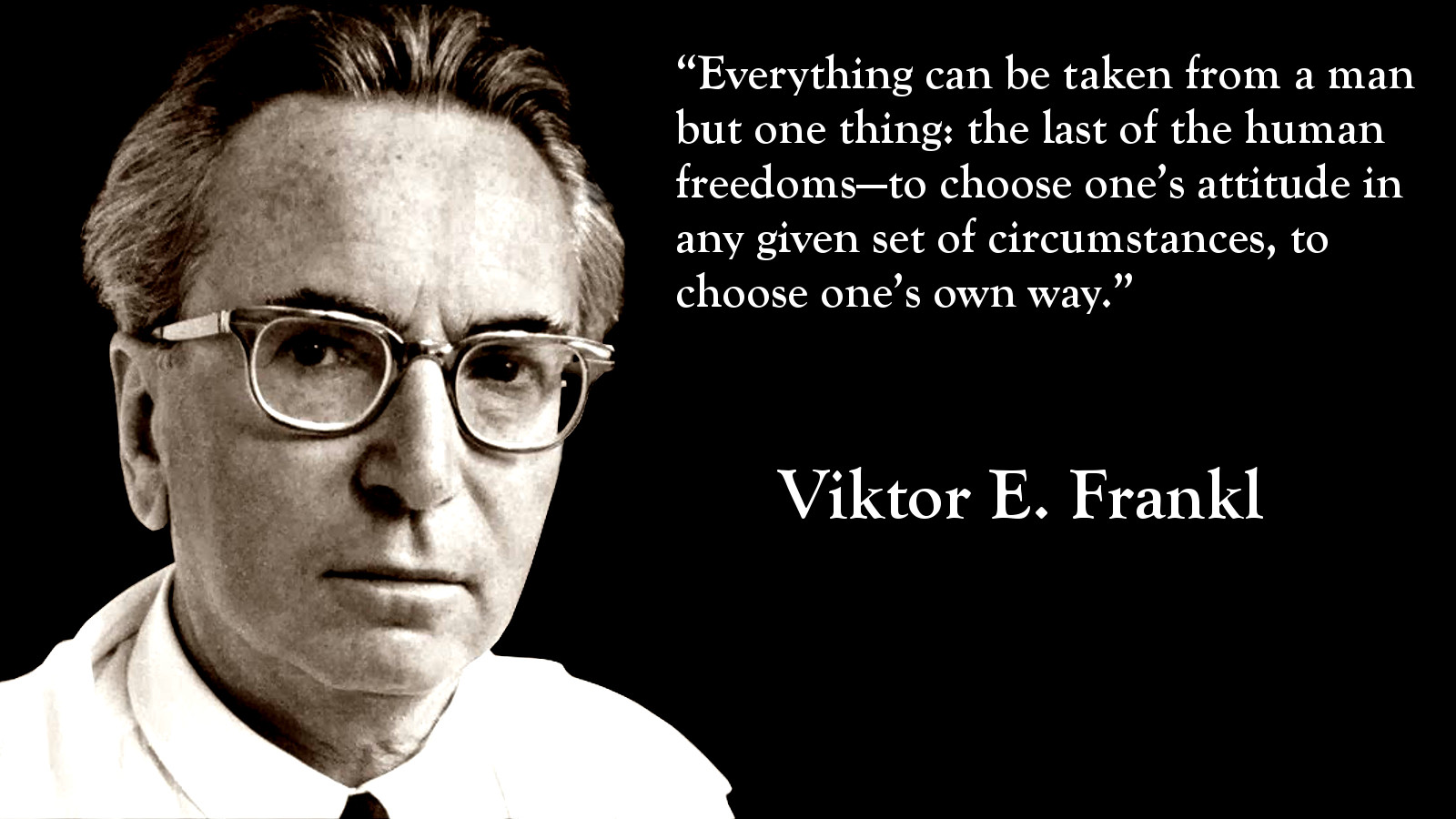
In his book, Viktor Frankl states that the meaning of our life can be found through 1) work, 2) love and 3) suffering. (Not that suffering is desirable: as long as it can be avoided, we should find meaning in changing our situation for the better.) But when suffering is unavoidable, even when everything has been taken away from us, the last of our human freedoms that can not be taken away is this: the freedom to choose one’s attitude in any set of circumstances, to choose one’s own way.
This turns around the perception of suffering from something inherently bad into something possibly beneficial. I myself have lived through trauma, transformed it and lived with the fruits of this inner work for years, but I always kept thinking: what would happen in the worst of the worst of circumstances?
Never have I found such a clear explanation of the value of suffering as in this book, coming from the mouth of a survivor of the Holocaust – the epitome of suffrage. Paraphrased, what he argues is this:
Suffering helps find the meaning of life
In Frankl’s view, the will for meaning is our deepest drive (not the will for sex or fear or power, as some of his predecessors have proposed). Responding to suffering is an opportunity to give meaning to our life, and true meaning can only be found in self-transcendence.
And there I found the answer to my MIQ, in my own understanding:
Suffering is a means to awakening
If we let it.
And that is essential: we have to let it. Frankl’s invitation is to take responsability in our approach to life, where we have the opportunity to show human greatness, and to never stop making that brave choice.
Instead of asking, “what is the meaning of my life?” we should recognize that actually life is asking this question of us. We can give our own answer by responding to our life’s circumstances in the best way we possibly can:
“In accepting this challenge to suffer bravely, life has a meaning up to the last moment, and it retains this meaning up to the very end.”
– From Man’s Search for Meaning by Viktor FranklThe psychiatrist acknowledges that not everybody in the Nazi camps has been able to transcend this amount of suffering, in fact – most weren’t. Yet the examples of some of them who did, even if only a few, are proof of our natural and true human potential.
I would like to end with the final sentences of Man’s Search for Meaning, words that brought chills all over my body and tears in my eyes:
“Our generation is realistic, for we have come to know man as he really is. After all, man is that being who invented the gas chambers of Auschwitz; however, he is also that being who entered those gas chambers upright, with the Lord’s Prayer or the Shema Yisrael on his lips.”
-

Live your questions (Rilke quote)
I love this poem, which is not really a poem but a piece taken from a letter from Rilke to a young friend. It opens the space for the creative power of life to answer what is alive in our hearts, instead of putting pressure on the mind which is often a bad advisor anyway:
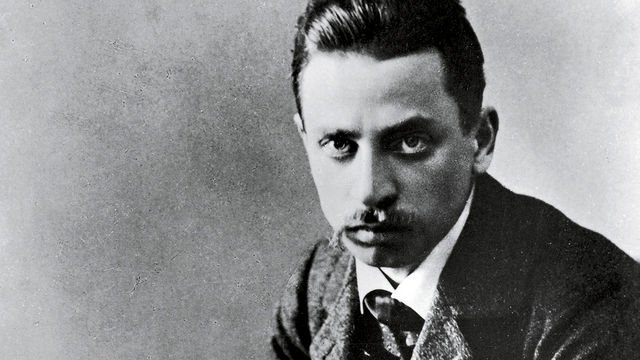
“(…) Be patient toward all that is unsolved in your heart and try to love the questions themselves, like locked rooms and like books that are now written in a very foreign tongue. Do not now seek the answers, which cannot be given you because you would not be able to live them. And the point is, to live everything. Live the questions now. Perhaps you will then gradually, without noticing it, live along some distant day into the answer.”
– Rainer Maria Rilke
In the original language, German:
(…)
Man muss Geduld haben
Mit dem Ungelösten im Herzen,
und versuchen, die Fragen selber lieb zu haben,
wie verschlossene Stuben,
und wie Bücher, die in einer sehr fremden Sprache
geschrieben sind.Es handelt sich darum, alles zu leben.
Wenn man die Fragen lebt, lebt man vielleicht allmählich,
ohne es zu merken,
eines fremden Tages
in die Antworten hinein. -

3 breath visualisations: ease your mind, open your heart, step into action
Three breathful visualisations for you today:
- Ease your mind
- Open your heart
- Step into action
You can choose to do them separately as you see fit or combine and include them in your morning routine as a great way to start your day.
You can do them one breath at a time, or take your time with them and stroll out into nature to do a full hour of practice.
Intro for all three practices
Find a chair, cushion or place on the ground where you can sit (or stand) comfortably.
Breathe only throught the nose or only through the mouth, do not alternate.
Lengthen your spine, gently roll your head on your neck a few times, then come back to the center.
Close your eyes, relax the forehead.
Yaaawn and relax your jaw.
Relax and soften the belly.Now, bring your attention to the natural rhythm of your breath.
1. Ease your mind
The mind is like the sky, white clouds of thought against a background of peaceful blue.
On the inbreath, you may see the clouds dissolving. On the outbreath, only deep blue peace remains.Breathing in and out, say with your inner voice:
“Breathing in, thoughts dissolve”
“Breathing out, mind is peace”(Repeat as often as you like)
2. Open your heart
The heart is like the Sun, shining with love. On the inbreath, breathe in light fueling the sun. On the outbreath, love’s light is shining brightly.
Breathing in and out, say with your inner voice:
“Breathing in, I open my heart”
“Breathing out, I am love”(Repeat as often as you like)
2. Step into action
The body is balanced and strong, like a ninja’s. On the inbreath, get ready. On the outbreath, step forward and box or make any ninja move you like while making this sound from the belly: Ha!.
SAY – Breathing in and out, say with your inner voice:
“Breathing in, I am ready for action”
“Breathing out, Ha!”(Repeat as often as you like and play with sounds and moves)
-

Stop believing your mind (read The Untethered Soul)
“There is nothing more important to true growth than realizing that you are not the voice of the mind – you are the one who hears it.”
― Michael A. Singer, The Untethered Soul: The Journey Beyond YourselfHere’s a fun exercise: write down your thoughts for a day, or even a couple of hours. Then read out loud what you’ve written down.
It will be a dreamlike, rather incomprehensive monologue or inner conversation, a collection of words and sentences pretty random, often contradictive and colored by emotion.
If this were a real life professional you were consulting for guidance in your life, would you be happy with their service? If this was your friend talking, would you think they are sane?
In his book The Untethered Soul, Michael Singer helps readers let go of the sense that they are their minds, or even that they should believe their thoughts all the time. Instead, he helps them find their sense of I somewhere deeper, in a place untainted by the turbulence of life.
Reading this book has helped me and many friends live from love, not fear, even when things get busy, messy or tough. I always recommend it to people who suffer from an overactive mind or who notice they live in their heads much of the time.
“Do not let anything that happens in life be important enough that you’re willing to close your heart over it.”
― Michael A. Singer, The Untethered Soul: The Journey Beyond Yourself -

Conscious activism
An eye for an eye only ends up making the whole world blind.
– GandhiConscious activism is enlightened activism. It is acting from love. As long as I sense hatred in my heart towards the people or system I am fighting, I need to heal myself first.
What always helps me is The Work by Bryon Katie:
First, list your thoughts about the issue (who do you resent and why, how do you suggest they should change).
Then, for each thought, answer the following four questions:
- Is it true? Yes or no.
- Can you absolutely know that it’s true? Yes or no.
- How do you react, what happens, when you believe that thought?
- Who would you be without this that thought?
Now, find three turnarounds for each of the thoughts. For example, state the opposite or state “I” in stead of “them”.
What we see in the world is actually what is (unconsciously) alive in us. This is called projection. In order to really bring wholesome change, we need to first embody it. This is what is meant when we say ‘be the change you wish to see in the world’.
I may find that some of my convictions could use some nuance, stem from a deeper pain within myself which needs to be addressed first, or that I need to be applying some of my own advice in my own life before judging others.
And so after having done our own inner work, we are free to act strongly, from love.
A good person will resist an evil system with his whole soul. Disobedience of the laws of an evil state is therefore a duty.
– GandhiConscious activism acts from love. If you are serious about bringing real change, start with The Work. Then act. Or, in the words of Marianne Williamson: “Love hard, pray hard, kick ass.”