Category: Blog EN

  • Liberated from prison

    Liberated from prison

    One of my teachers, the beloved Ananta Kranti, was liberated while doing time in a Japanese prison. The intense regime and extremely limited freedom led her to finding peace within herself, a limitless place underneath the experience of severe deprivation.

    Another friend woke up in the storm of heartache after losing the (then) love of her life.

    An acquintance has found her freedom through the death of her nine year old son.

    Michael Brown suffered from excruciating headaches, healed himself through a combination of breathwork and mental/spiritual discipline and delivered The Presence Process to the world.

    Eckhart Tolle, Byron Katie and Marianne Williamson were depressed on the verge of suicide, woke up from their nightmare and became three of the world’s most recognized teachers in self realisation.

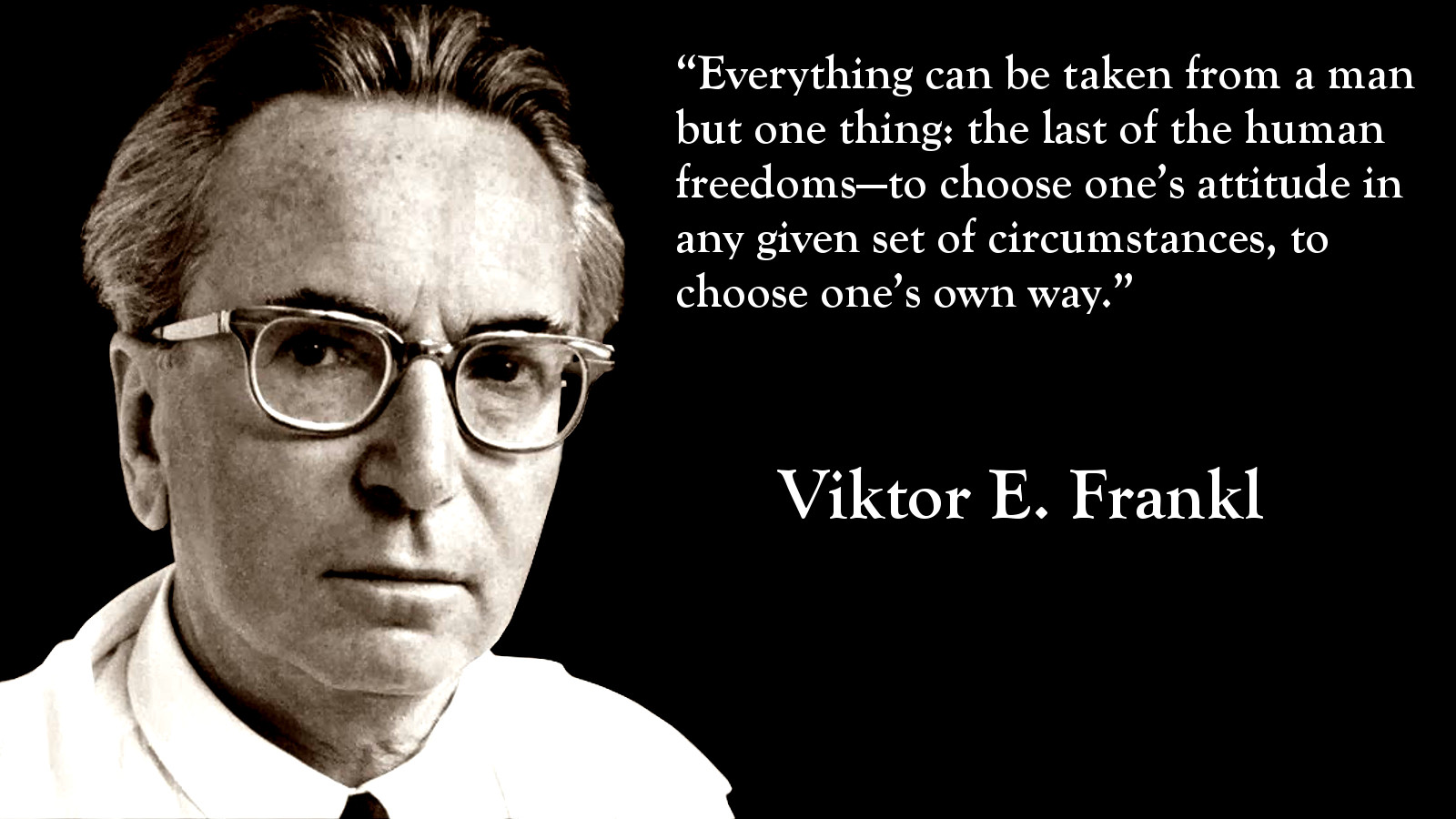
    Viktor Frankl wrote the iconic Man’s Search for Meaning thanks to his three years in Nazi concentration camps.

    We are so much greater than anything that can happen to us. Our prisons are mind made. Even – no, not even: especially in the midst of the deepest suffering lies our opportunity to break free from it forever.

    And writing those words, this now brings home Byron Katie’s statement, already understood but now realised in an even deeper way:

    “Until you can look forward to all aspects of life without fear, your Work is not done.”
    – Byron Katie

  • Suffering and the meaning of life

    Suffering and the meaning of life

    A couple of days ago I read Sacha Post’s post about asking yourself your Most Important Questions. In it, he recommends intentionally asking the Most Important Question (MIQ) that is alive in you right now, then get into a relaxed state for the remainder of the day and revisit the question first thing in the morning.

    I liked the idea and found my own MIQ rather quickly:

    Why is there suffering?

    In my earlier inquiries into this question before, I hadn’t been able to find a satisfying answer. Yet I knew deeply that there was more to this subject. And now that I have found my answer, it seems to obvious I can hardly believe it wasn’t this clear before.

    The next day after intentionally setting my MIQ, as soon as I revisited the question, a book title came to my mind. It’s a famous book that I had never before taken the opportunity to read. The title is Man’s Search for Meaning by Viktor Frankl and it is the personal and professional account of a Jewish psychiatrist who lived in Nazi concentration camps for three years and survived.

    As soon as I started reading, page after page, the book took my question to a higher level and answered it with countless examples.

    Reading it, I have come to rephrase the original MIQ to:

    What is the meaning of suffering?

    In his book, Viktor Frankl states that the meaning of our life can be found through 1) work, 2) love and 3) suffering. (Not that suffering is desirable: as long as it can be avoided, we should find meaning in changing our situation for the better.) But when suffering is unavoidable, even when everything has been taken away from us, the last of our human freedoms that can not be taken away is this: the freedom to choose one’s attitude in any set of circumstances, to choose one’s own way.

    This turns around the perception of suffering from something inherently bad into something possibly beneficial. I myself have lived through trauma, transformed it and lived with the fruits of this inner work for years, but I always kept thinking: what would happen in the worst of the worst of circumstances?

    Never have I found such a clear explanation of the value of suffering as in this book, coming from the mouth of a survivor of the Holocaust – the epitome of suffrage. Paraphrased, what he argues is this:

    Suffering helps find the meaning of life

    In Frankl’s view, the will for meaning is our deepest drive (not the will for sex or fear or power, as some of his predecessors have proposed). Responding to suffering is an opportunity to give meaning to our life, and true meaning can only be found in self-transcendence.

    And there I found the answer to my MIQ, in my own understanding:

    Suffering is a means to awakening

    If we let it.

    And that is essential: we have to let it. Frankl’s invitation is to take responsability in our approach to life, where we have the opportunity to show human greatness, and to never stop making that brave choice.

    Instead of asking, “what is the meaning of my life?” we should recognize that actually life is asking this question of us. We can give our own answer by responding to our life’s circumstances in the best way we possibly can:

    “In accepting this challenge to suffer bravely, life has a meaning up to the last moment, and it retains this meaning up to the very end.”
    – From Man’s Search for Meaning by Viktor Frankl

    The psychiatrist acknowledges that not everybody in the Nazi camps has been able to transcend this amount of suffering, in fact – most weren’t. Yet the examples of some of them who did, even if only a few, are proof of our natural and true human potential.

    I would like to end with the final sentences of Man’s Search for Meaning, words that brought chills all over my body and tears in my eyes:

    “Our generation is realistic, for we have come to know man as he really is. After all, man is that being who invented the gas chambers of Auschwitz; however, he is also that being who entered those gas chambers upright, with the Lord’s Prayer or the Shema Yisrael on his lips.”

  • Live your questions (Rilke quote)

    Live your questions (Rilke quote)

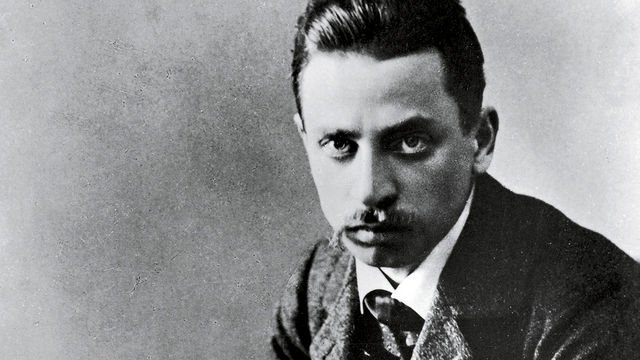
    I love this poem, which is not really a poem but a piece taken from a letter from Rilke to a young friend. It opens the space for the creative power of life to answer what is alive in our hearts, instead of putting pressure on the mind which is often a bad advisor anyway:

    “(…) Be patient toward all that is unsolved in your heart and try to love the questions themselves, like locked rooms and like books that are now written in a very foreign tongue. Do not now seek the answers, which cannot be given you because you would not be able to live them. And the point is, to live everything. Live the questions now. Perhaps you will then gradually, without noticing it, live along some distant day into the answer.”

    – Rainer Maria Rilke

    In the original language, German:

    (…)

    Man muss Geduld haben

    Mit dem Ungelösten im Herzen,
    und versuchen, die Fragen selber lieb zu haben,
    wie verschlossene Stuben,
    und wie Bücher, die in einer sehr fremden Sprache
    geschrieben sind.

    Es handelt sich darum, alles zu leben.
    Wenn man die Fragen lebt, lebt man vielleicht allmählich,
    ohne es zu merken,
    eines fremden Tages
    in die Antworten hinein.

  • My favorite animation of conception & baby growing in the womb

    My favorite animation of conception & baby growing in the womb

    When we had just found out I was pregnant, we found this video on Youtube. It is a beautiful animation not just of the fetus growing in the womb but also of the conception itself. Sperm swimming their way to the egg, competing to find their way in. Credits to the guys, without whom none of what follows were ever even possible.

  • 3 breath visualisations: ease your mind, open your heart, step into action

    3 breath visualisations: ease your mind, open your heart, step into action

    Three breathful visualisations for you today:

    1. Ease your mind
    2. Open your heart
    3. Step into action

    You can choose to do them separately as you see fit or combine and include them in your morning routine as a great way to start your day.

    You can do them one breath at a time, or take your time with them and stroll out into nature to do a full hour of practice.

    Intro for all three practices

    Find a chair, cushion or place on the ground where you can sit (or stand) comfortably.
    Breathe only throught the nose or only through the mouth, do not alternate.
    Lengthen your spine, gently roll your head on your neck a few times, then come back to the center.
    Close your eyes, relax the forehead.
    Yaaawn and relax your jaw.
    Relax and soften the belly.

    Now, bring your attention to the natural rhythm of your breath.

    1. Ease your mind

    The mind is like the sky, white clouds of thought against a background of peaceful blue.
    On the inbreath, you may see  the clouds dissolving. On the outbreath, only deep blue peace remains.

    Breathing in and out, say with your inner voice:

    “Breathing in, thoughts dissolve”
    “Breathing out, mind is peace”

    (Repeat as often as you like)

    2. Open your heart

    The heart is like the Sun, shining with love. On the inbreath, breathe in light fueling the sun. On the outbreath, love’s light is shining brightly.

    Breathing in and out, say with your inner voice:

    “Breathing in, I open my heart”
    “Breathing out, I am love”

    (Repeat as often as you like)

    2. Step into action

    The body is balanced and strong, like a ninja’s. On the inbreath, get ready. On the outbreath, step forward and box or make any ninja move you like while making this sound from the belly: Ha!.

    SAY – Breathing in and out, say with your inner voice:

    “Breathing in, I am ready for action”
    “Breathing out, Ha!”

    (Repeat as often as you like and play with sounds and moves)

  • Stop believing your mind (read The Untethered Soul)

    Stop believing your mind (read The Untethered Soul)

    “There is nothing more important to true growth than realizing that you are not the voice of the mind – you are the one who hears it.”
    Michael A. Singer, The Untethered Soul: The Journey Beyond Yourself

    Here’s a fun exercise: write down your thoughts for a day, or even a couple of hours. Then read out loud what you’ve written down.

    It will be a dreamlike, rather incomprehensive monologue or inner conversation, a collection of words and sentences pretty random, often contradictive and colored by emotion.

    If this were a real life professional you were consulting for guidance in your life, would you be happy with their service? If this was your friend talking, would you think they are sane?

    In his book The Untethered Soul, Michael Singer helps readers let go of the sense that they are their minds, or even that they should believe their thoughts all the time. Instead, he helps them find their sense of I somewhere deeper, in a place untainted by the turbulence of life.

    Reading this book has helped me and many friends live from love, not fear, even when things get busy, messy or tough. I always recommend it to people who suffer from an overactive mind or who notice they live in their heads much of the time.

    “Do not let anything that happens in life be important enough that you’re willing to close your heart over it.”
    Michael A. Singer, The Untethered Soul: The Journey Beyond Yourself

  • Diapers: cloth or disposable?

    Diapers: cloth or disposable?

    In short: we use both.

    We’ve had cloth diapers from the start but ended up hardly using them at first because (even in size S) they looked very large on our little girl. Although she didn’t seem to mind, it just didn’t look healthy to us to have her tilt her whole body when lying down just because of the diaper.

    But ever since she started eating solid food (next to breastfeeding on demand) and using the potty, both at around five months, I love the cloth diapers. They are climate friendly, almost as easy to use and save a lot of money. Also, they help in potty training because they do worse at absorbtion, thus making it more obvious when the diaper needs changing.

    When away from home, we still use disposable diapers. It’s lighter, easier, less volume, easier for family who are not used to cloth diapers. But honestly, this is a matter of laziness comfort. Cloth would work as well. It’s a compromise.

    For Dutchies: I really liked this article: https://kiind.nl/waarom-wasbare-luiers/.

    Bonus tip: check out the diaper free movement for even more (= less) fun with diapers.

  • Use your B.R.A.I.N.

    Use your B.R.A.I.N.

    This video actually comes from the hypnobirthing online course that we took but it is a life hack for everybody, not just parents-to-be :).

    In short, the lesson is: whenever you are presented with a difficult decision, use your BRAIN. That means asking the following questions:

    Benefits – what are the benefits?
    Risks – what are the risks?
    Alternatives – what are the alternatives (if any)?
    Intuition – what does my intuition say?
    Nothing – what happens if we do nothing?

    Applying this routine brings insight, clarity and control, even in complex situations such as medical, judicial or technical emergencies where you might typically feel helpless in the hands of experts and their protocols.

  • The Positive Birth Company online hypnobirthing course rocks

    The Positive Birth Company online hypnobirthing course rocks

    I will share about our ‘positive birth’ in detail at a later time, but here is a golden tip for any pregnant couple wanting to prepare for a smooth birth: buy the Positive Birth Company digital pack. It has about 40 videos and contains everything you need to have, do and know for a safe and happy birth.

    Prepare carefully, then let go and commit to breathing during the birth. Let your birth partner take care of the rest (he or she will know exactly what to do and not do after watching the course). If anything comes up and decisions need to be made, use your B.R.A.I.N. (one of my big takeaways from the course and it’s not just handy for births, it’s a life lesson).

    It was the only course we took and it was all we needed. Lua’s birth was a beautifully deep, strong and joyful process. And when things took an adventurous turn, we knew exactly how to respond, doing what was needed in the moment while staying fully present and relaxed. I remember no pain, only power, beauty and full surrender.

    Take this course. It is high quality and at 39 GBP, unexpectedly cheap.

  • Breast feeding: clear and wonderful how-to video

    Breast feeding: clear and wonderful how-to video

    This is a wonderful video. It is very helpful for an important part of parenting: feeding your baby the very best nutrition available and nurturing the most beautiful, essential bond there is. (Yes I am a breast feeding enthusiast.)

    I found the video enlightening in many respects. It shows all the do’s and don’ts, but apart from that, it shows women and their babies of many different racial and social/cultural backgrounds with different body types in an experience that unites us all.